How AI Is Making Hiring Worse for Genuine Candidates in 2026
How AI Is Making Hiring Worse for Genuine Candidates www.venusresumes.com
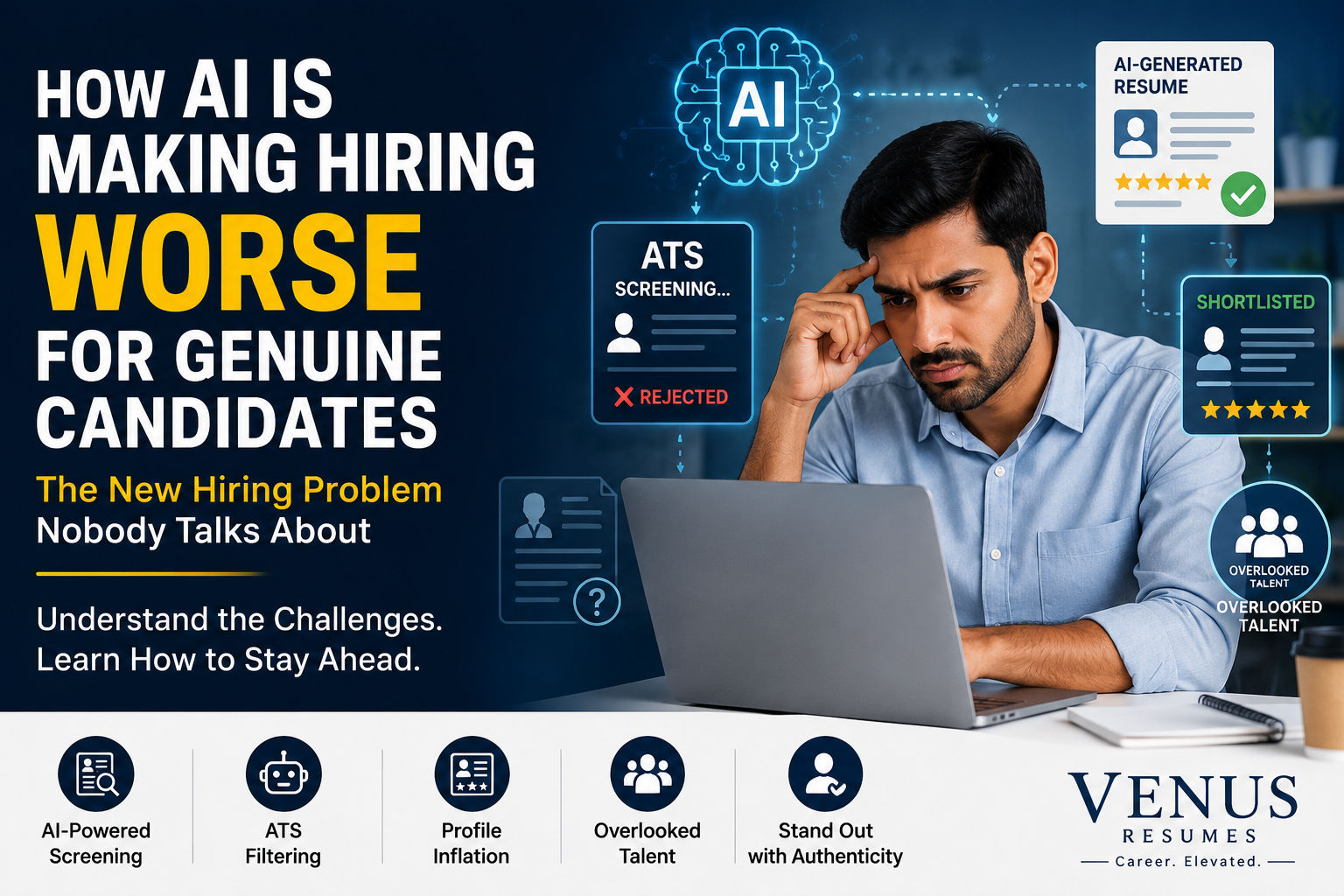
The New Hiring Problem Nobody Talks About
A few years ago, technology was supposed to make hiring easier. Instead, many genuine job seekers now feel more frustrated than ever.
Today, candidates use AI to write resumes, recruiters use AI to screen applications, and job portals use AI to rank profiles. Somewhere in this automated process, qualified professionals are getting overlooked.
Many applicants spend days preparing applications only to receive no response. Others see interview calls go to candidates whose resumes look impressive on paper but do not match their actual skills. While AI has made hiring faster, it has also created new challenges that are making it harder for authentic candidates to stand out.
Why Is This Happening?
The rise of AI tools has changed how both employers and candidates approach recruitment.
Job seekers now have access to tools that can instantly create resumes, cover letters, LinkedIn summaries, and application responses. While these tools save time, they have also led to thousands of nearly identical applications entering the hiring system every day.
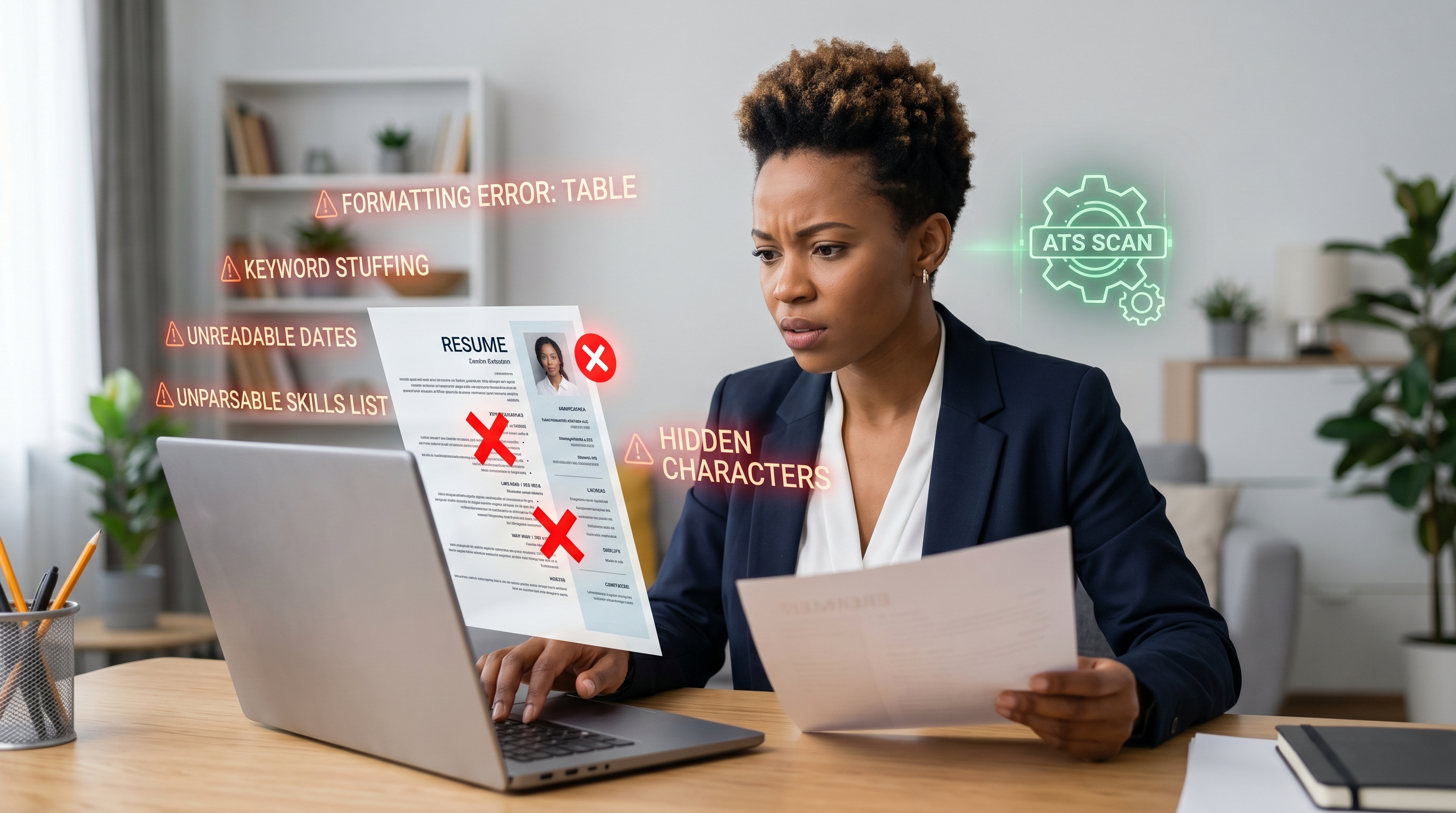
Recruiters, overwhelmed by the volume, increasingly rely on Applicant Tracking Systems (ATS) and automated screening software to filter candidates. These systems often focus heavily on keywords, formatting, and profile matching rather than actual capability or career potential.
As a result, many experienced professionals who have strong skills but poorly optimized profiles never make it past the first screening stage. At the same time, candidates who understand how to "game" AI systems may receive higher visibility despite lacking relevant expertise.
Another issue is profile inflation. AI-generated resumes can make average experience appear exceptional. Recruiters then spend more time verifying information, leading to increased skepticism toward all applications—including genuine ones.
The outcome is simple: more applications, more automation, and less human evaluation.
Real Situations Candidates Are Facing Today
Consider a professional with eight years of experience who manually writes a concise and honest resume. Their document clearly explains achievements but lacks some of the exact keywords used in the job description. The ATS rejects the application before a recruiter even sees it.
Now compare that with another applicant who uses AI tools to insert every possible keyword, regardless of relevance. Their profile passes the screening stage and reaches the recruiter first.
Another common example involves LinkedIn profiles. Many professionals focus only on updating their resumes while leaving their LinkedIn profiles outdated for months or even years. Recruiters searching talent databases often discover candidates through optimized online profiles rather than uploaded resumes. A strong candidate with an inactive profile may never appear in recruiter searches.
Job portals present similar challenges. Recruiters frequently prioritize profiles that show recent activity, updated skills, and current employment details. Candidates who do not regularly update these platforms gradually become less visible, regardless of their qualifications.
In some cases, hiring managers have reported interviewing candidates whose AI-generated applications looked outstanding but whose actual knowledge failed to match what was written. This creates additional scrutiny for every applicant entering the process.
How Genuine Candidates Can Stay Ahead
The good news is that AI is not the enemy. The problem arises when candidates rely entirely on automation or ignore how modern hiring systems work.
Use this checklist to improve your visibility without compromising authenticity:
✓ Keep your resume updated for every major role you target.
✓ Include relevant industry keywords naturally instead of stuffing them into the document.
✓ Quantify achievements with numbers, percentages, revenue impact, cost savings, or project outcomes.
✓ Maintain an active and complete LinkedIn profile with an updated headline, summary, skills, certifications, and recent accomplishments.
✓ Refresh your profiles on job portals regularly, even when actively employed.
✓ Ensure your resume, LinkedIn profile, and job portal profiles contain consistent information.
✓ Use AI tools for assistance, proofreading, and formatting—not for creating exaggerated achievements.
✓ Highlight real results rather than generic responsibilities.
✓ Customize applications based on the role rather than sending the same resume everywhere.
✓ Build a professional online presence through industry content, networking, and recommendations.
✓ Focus on quality applications instead of applying to hundreds of jobs blindly.
✓ Remember that recruiters still value credibility, consistency, and demonstrated expertise.
Technology may determine who gets noticed first, but genuine skills still determine who gets hired.
Final Thoughts
AI has transformed recruitment, but it has also created new barriers for honest professionals. Candidates who combine authenticity with smart profile optimization will always have an advantage. If your resume, LinkedIn profile, and job portal presence accurately reflect your value, you are far more likely to stand out in an increasingly automated hiring landscape.
Need help improving your resume, LinkedIn profile, or job portal visibility? Venus Resumes can help you build a stronger professional presence that works for both recruiters and modern ATS systems.


×
![]()